
Guest Post - Kieran with an Evolved Q (redux)
Foreword: This is a followup to Kieran’s report on obtaining a Q-grader certificatation. The achievement was short-lived, as it was made obsolete immediately in transition to the SCA’s Coffee Value Assessment (CVA) form, for the “evolved Q-grader”.
This post outlines that transition, followed by his ruminated thoughts over the past year coming to grips with the paradigm shift. This is a peek into what goes through the mind of a coffee professional navigating their career.
This post is mirrored from Kieran’s blog, the same post can be found here.
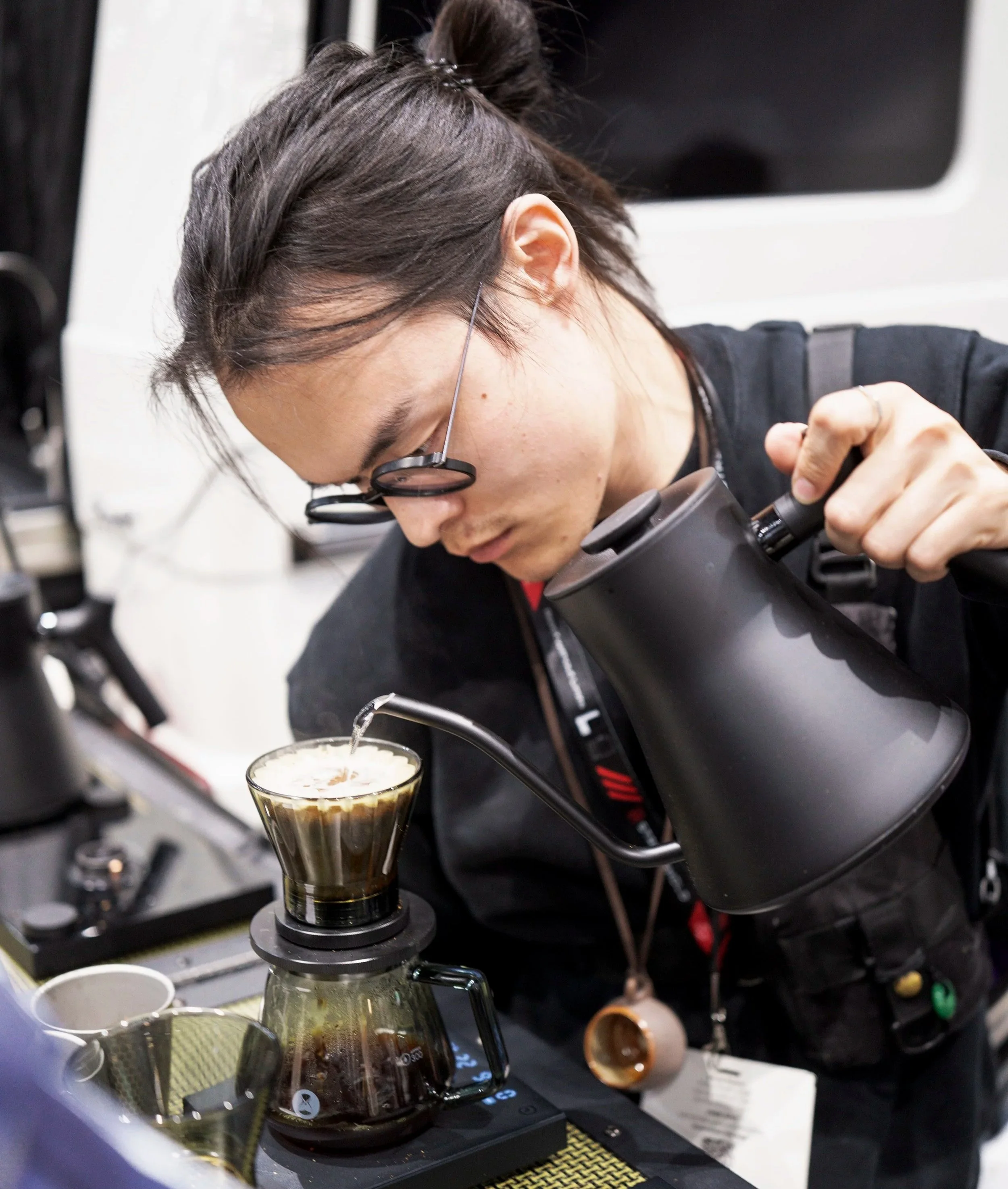
Kieran brewing at World of Coffee San Diego 2026
During my original Q course, there were two major principles I took away from my instructor Sandra Loofburrow; ‘We want to be nice to the coffee’ and ‘Every coffee has a home’. Two principles that can seem innocuous or innocent but to me hold more meaning and power over how I score coffees to this day. While tasting I often tell myself that someone will enjoy this coffee, even if I don’t. With the advent of the new CVA (Coffee Value Assessment) forms I have mixed feelings about the effectiveness of scoring coffees following the protocols the SCA (Specialty Coffee Association) has pushed forward. While we have been encouraged to evaluate coffees with specific markets in mind, I can’t help but feel that where there was once a clear protocol for scoring and qualifying coffees there is now a nebulous and confused system with a motive that feels unclear.
As I had stated in my previous contribution to Robert’s blog and on my own blog, the SCA has decided to roll out a new program for Q graders who had acquired their certification before the program moved from the CQI (Coffee Quality Institute) to the SCA. This course is called the CVA for Cuppers Course and Exam Combo. I had the opportunity to take the course with Evan Gilman at The Crown in Oakland, California about 6 months ago and wanted to chronicle my experience going through the two day course so that other folks who are contemplating taking the CVA course or the new Q graders course can have a bit more information before committing to spending time and resources to retain or gain the certification. By extension I also want to give context to anyone who is curious about both the Legacy Q grader program as well as the new CVA system.
I’ll give a quick overview of the four forms covered in the CVA course and my opinion on each of them individually afterwards and follow that up with some closing thoughts. Overall, the course was definitely a departure from the CQI programming in what I could only understand to be a simplification of the program, effectively lowering the floor and potentially inviting a wider range of coffee professionals into the fold. If you’d like to follow along with my description of the forms you can find them here or on the SCA’s website. The CVA form course is broken up into the Physical Assessment, Descriptive Assessment, Affective Assessment and Extrinsic Assessment while doing away with the original points based SCA cupping form introduced back in 2004 and which has been the standard form for facilitating conversations concerning coffee quality since then. The focus has shifted to establishing a broader overarching definition of coffee quality and discourages the use of numbered scores to denote a coffee’s quality. With the departure away from numbered scores we are encouraged to focus on different attributes that can potentially tell us the overall value of a coffee.
The CVA course starts with the Physical Assessment form. This first form is described as a distinctive assessment meaning cuppers are expected to identify any notable defects in green quality to distinguish whether or not the coffee should be graded at all in the first place. This is similar to the CQI green assessment where Q candidates sort through samples of unroasted green coffee in order to identify any potential defects such as insect damage or foreign matter like rocks or twigs which would disqualify them from being scored as specialty coffees. All in all for this section very little has changed in the understanding of what Q graders need to do.
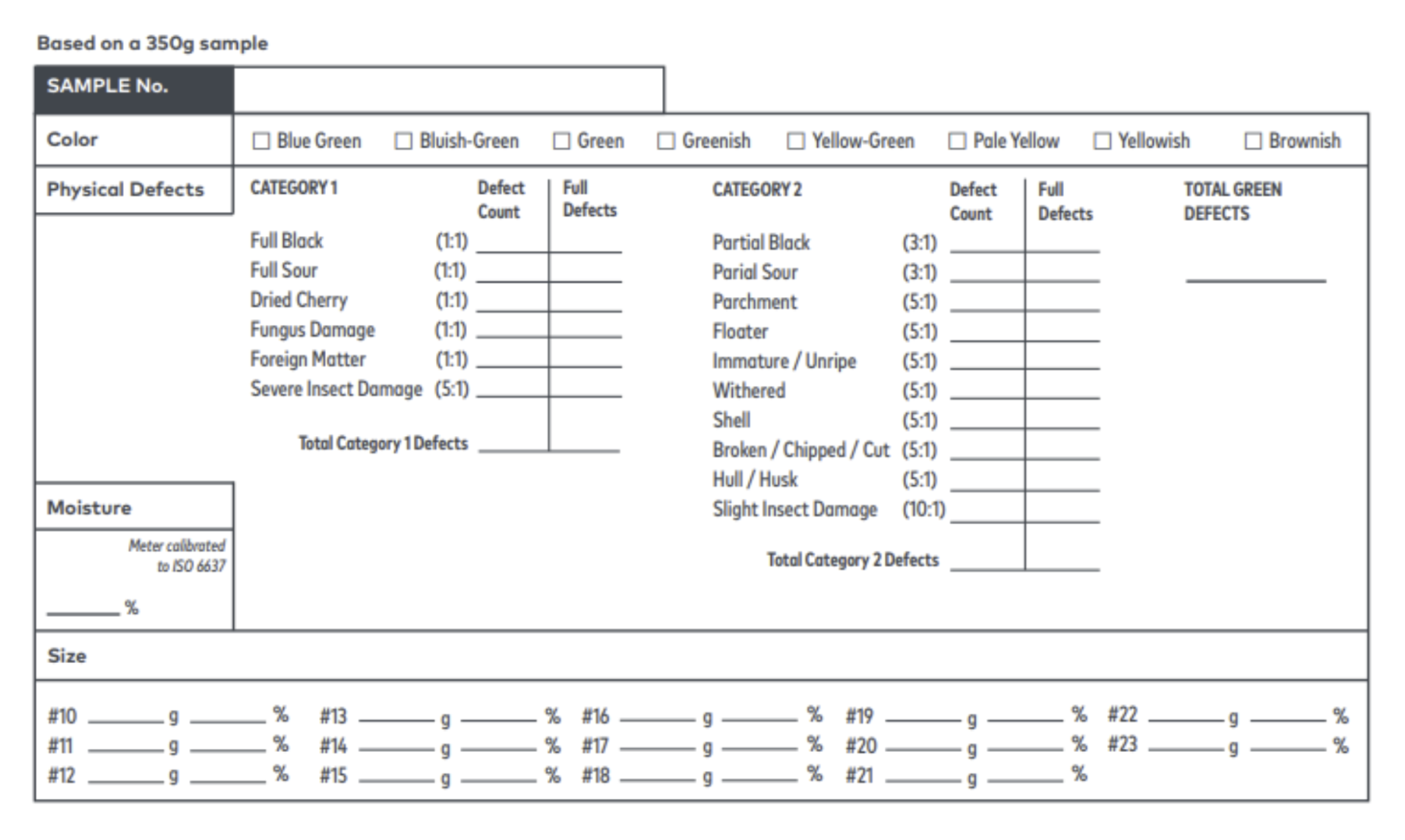
The CVA physical assessment form
The Intrinsic
The second and third forms were potentially the most controversial assessments of the course. Together they are meant to replace the original 2004 SCA Coffee Assessment form that the SCA is phasing out with this course. The Descriptive Assessment form is a significant departure away from the 2004 SCA form in many ways but most notably in two significant ways. The primary difference that we noticed in the course was the absence of a numbered score. The Affective Assessment, which is the third form, holds a space for that score; more on that later. The second difference that my cohort felt apprehensive about was the use of CATA (Check All That Apply) boxes. Instead of open spaces to note our own experiences with the coffees we were instructed to check no more than five of those boxes while denoting the intensity of each flavor attribute listed on the form for the sample. This felt like an inadequate and reductive way to force tasters to describe the coffees they were tasting. This also minimizes the amount of individual taste calibration cuppers need to have collectively at the same table which lowers the baseline requirement for assessing quality.
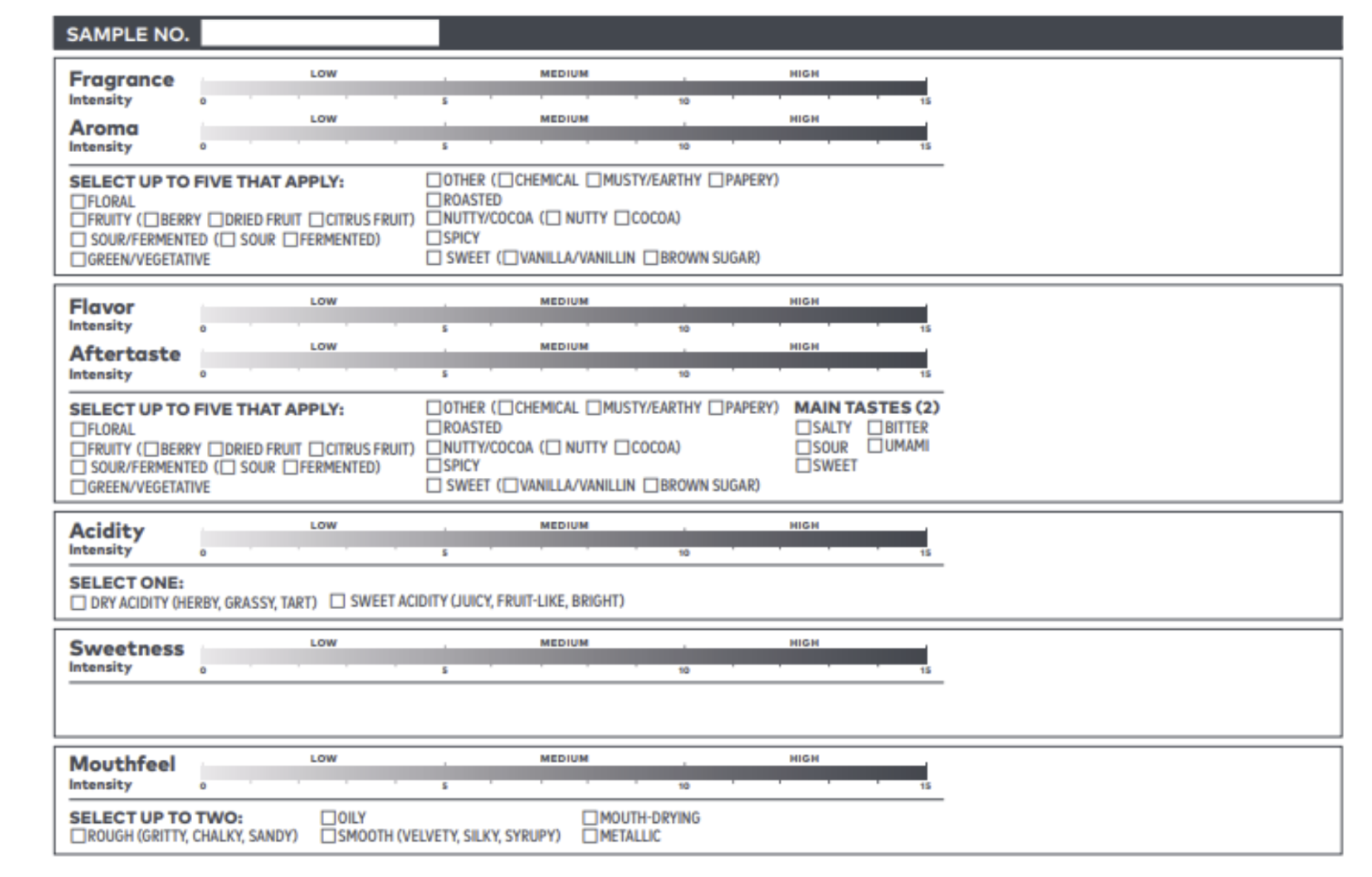
The CVA descriptive assessment form
Beyond those two points, the most major difference between the CVA and the 2004 form was the brew method requirements for analyzing different samples of the coffees. For the descriptive analysis we are allowed to quite literally use any method to brew our coffee. This includes everything from batch brewing a coffee to espresso. I’m sure many of you can see the issues with this approach and I will insert some of my own opinion here to point out some of the potential pitfalls of this protocol. In our own course we tasted samples of batch brewed coffee. There were six carafes of coffee to taste from. Two of the coffees were supposed to be the same within the six. This also happened on the original Q exam as well. Students would be required to score the same coffee the same way or at least within a relative point tolerance based on their alignment/calibration with the rest of their cohort. However many of us noticed marked differences between all of the samples and were not able to readily find the pair of matching coffees.
One of the issues I encountered within this protocol was the different brew temperatures of each coffee while tasting. To brew six batches of coffee back to back to back etc. you would need to have six batch brewers to ensure all of the samples were fresh and consistent to each other. We all know that as coffee cools there is a significant difference in the presentation of sweetness and acidity. The six coffees were all brewed one after the other leading to a slight difference in temperature between each coffee thus resulting in my fellow tasters not being able to tell with confidence whether or not there were any coffees on the table that were the same. Some might think, ‘okay well that could just be a skill issue and you need to be better at identifying coffees.’ To which I would answer, why would we not just eliminate the guesswork between samples? The previous system was built and refined to compensate for inconsistencies like this. Allowing tasters to describe coffees based on potentially inconsistent brews is not doing those coffees nor the tasters themselves any favors and creates a high variance environment which inevitably could lead to inconsistent scoring.
Moving on to the Affective Assessment form, which is where we are allowed to input a score, I feel less apprehensive about how this form is utilized but have issues with the implications it has over calibration and alignment within the collective of industry professionals. The intended use of this form is to effectively score a coffee based on your preference or the preference of a known market meaning you can take notes and score a coffee to how you like it or to how you think someone else might like it. This assessment is done through cupping making this form the spiritual successor to the 2004 form without the weight of price discovery of the coffee being tasted.
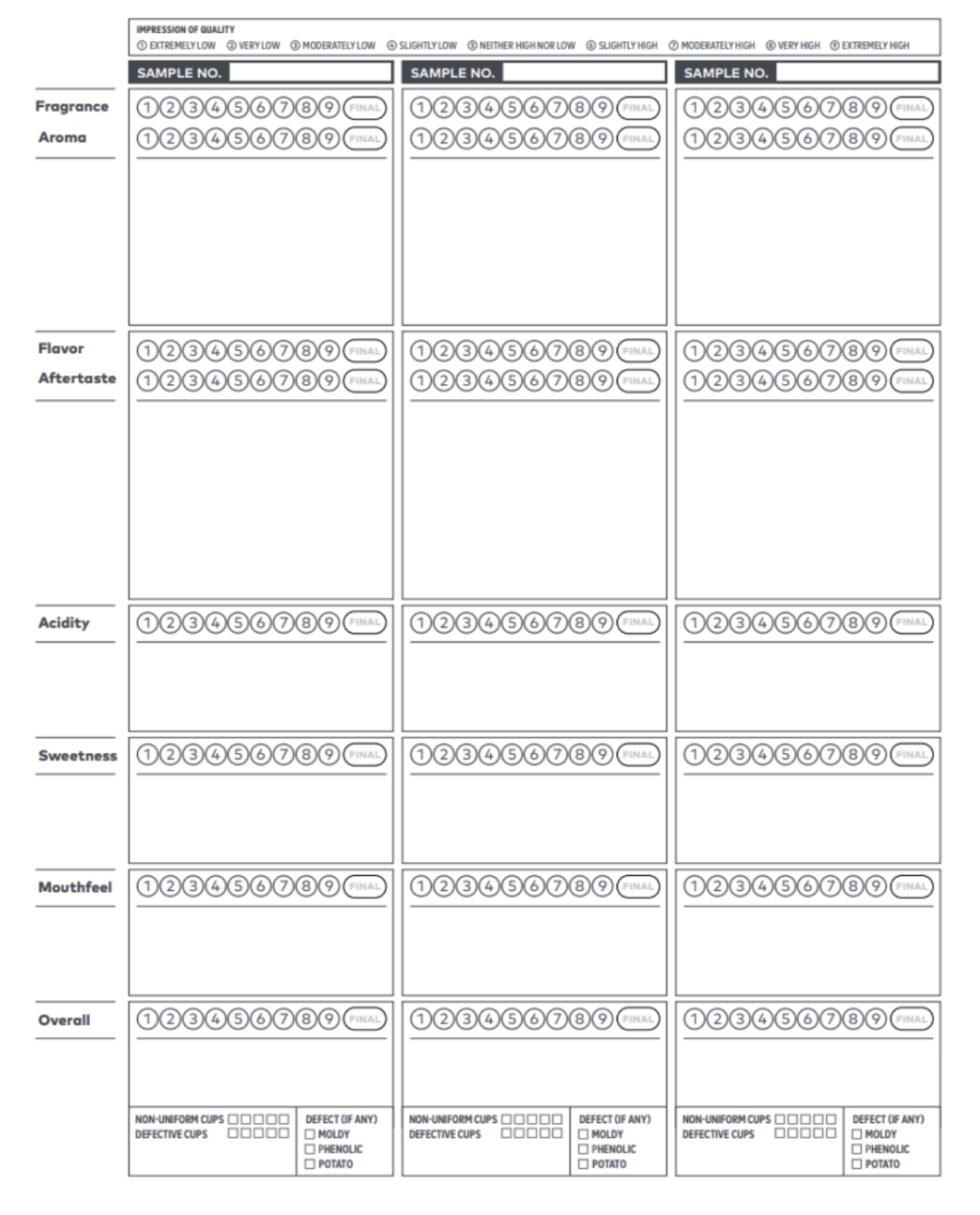
The CVA affective assessment form
We were consistently told during the course that the affective scores did not mean anything outside of our own preferences and that calibration or alignment with the rest of the cohort was unnecessary and/or irrelevant. I do want to state that I know that everyone will have their own preferences when it comes to what they enjoy and I fully want that to remain the same. However, by ignoring calibration between industry professionals, interpretation of quality will vary vastly and coffees that may previously have not qualified as specialty are now all of a sudden under this system considered to be specialty coffees. You dear reader could see this as a positive or a negative and truth be told I still have to understand how I feel about this new development. On one hand I do know that by opening up the possibility of new producers having their coffee scored as specialty under this system would be an amazing opportunity for them to bring in more revenue for their hard work. On the other hand, what degree of quality could this possibly bring into the specialty coffee scene? This also seems to poke deeper at the question of what actually qualifies a coffee as specialty beyond the score that the coffee receives? Two good questions that I don’t really know that I have clear and concise answers for at this time.
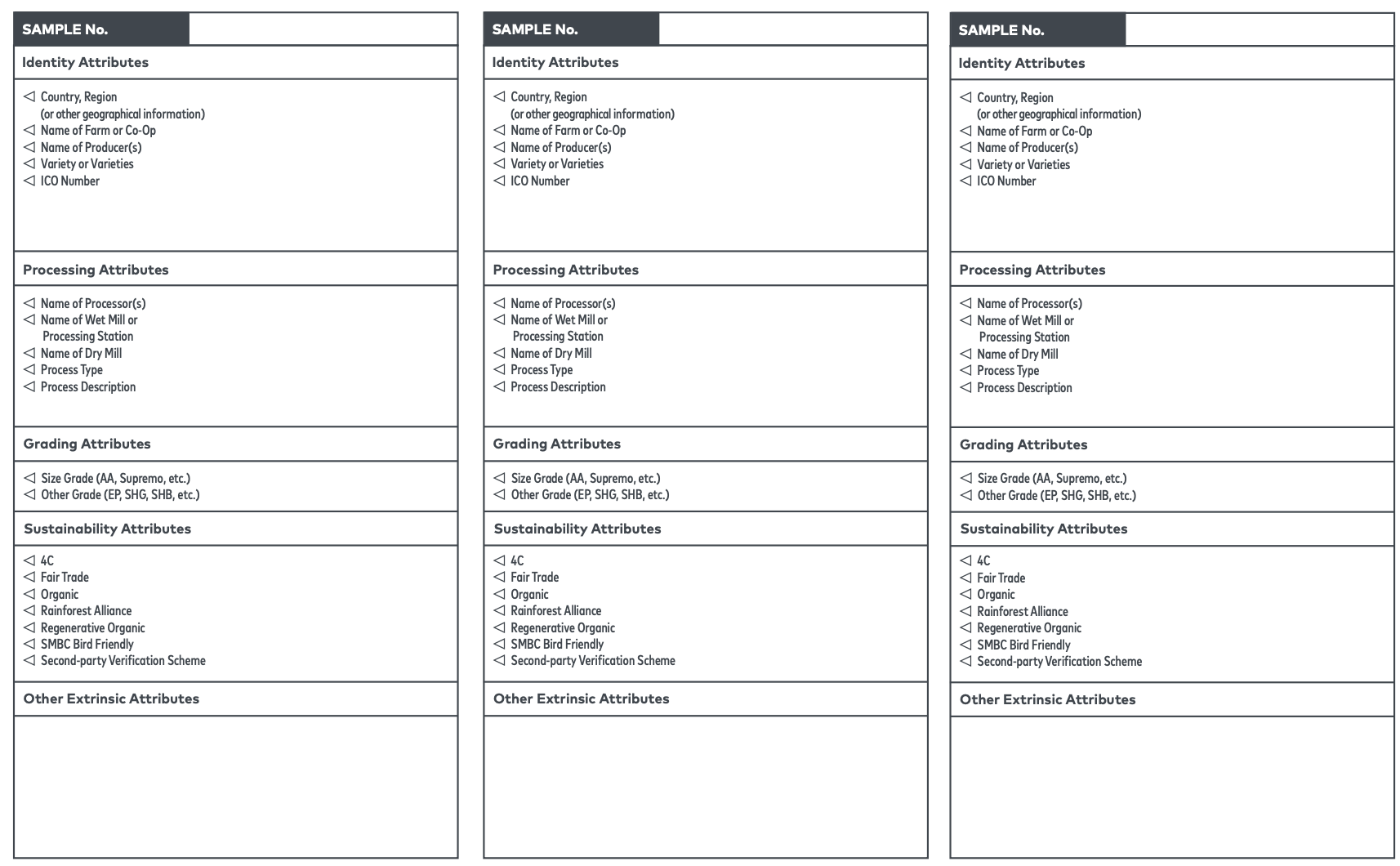
The CVA extrinsic assessment form
The Extrinsic
The fourth and final form is the Extrinsic Assessment form. This form was by far the most welcome addition. The Extrinsic form takes into account all of the attributes of a coffee outside of the intrinsic cup quality. This includes information about the coffee like origin, process, farmer and producer, and anything else that could potentially add value in the eyes of potential buyers of that coffee. For instance many cafes and coffee companies exclusively sell coffees from a specific country or region. If a cafe only sources coffees that are from Ecuador, all other coffees, regardless of inherent cup quality, are essentially worthless to them. There would be no extrinsic motivation for those operators to purchase those coffees in the first place. The Extrinsic form helps fill in a gap that did originally exist within the 2004 SCA form’s scope.
What We Have Now
If you’ve opened the CVA PDF form and followed along you may also have seen the final form on the file which is the Combined Assessment form. We were strongly discouraged to use this form during any assessment of coffee as it could potentially confuse the order of operations while analyzing a coffee. In my opinion the Combined form is the closest we will ever get to having a form that functions like the original 2004 form. Most of the Q graders that I have spoken to are either using this combined form or continue to use an internal version of the original form from 2004 with some variation of the latter being the preferred version of QC.
Tasting for a Target Market: Thoughts on Overall Implications
My feelings for the CVA aside, I do believe that the prioritization of business politics drove a lot of the decisions made while developing this form. It feels as if active industry professionals were not consulted or allowed to actively participate in the development of this assessment form and that might be the most disappointing part of the whole transition process. A major concern for me and many of my peers seems to lie within the fact that many producers who have been utilizing the 2004 form and original Q Grader system are now being forced into a new certification system that is being facilitated by a foreign body still in a foreign language. The original Q was already very pricey for both sides of the industry and to make the entire collective of industry professionals recertify is either a very greedy shortsighted play at consolidating power or a very shrewd and tactical business strategy that will propel the next wave of specialty coffee into the future. I often get asked why I took the course even though I didn’t really understand or agree with the new philosophy behind the CVA. I feel that I want to at least understand the why behind many of the decisions being made at a higher level than what I am privy to. In that sense the insight that I have gained by taking and passing the course gives me more credibility and confidence to say what I believe and what I want to continue to stand by within this industry.
I think a deeper issue has come up due in part to the major changes to the certification process. The credibility of the certification has been in some ways compromised and a regulatory body no longer exists in the same capacity to hold “calibrated tasters” to a uniform standard of tasting and scoring coffees. Valuation of coffees has become an exercise in a tasters ability to taste with a target market in mind and less about overall calibration with a wider and global network of sensory professionals. Lowering the floor in the interest of wider availability may have inadvertently diminished the value of the certification, creating a distinct difference in the skillset and experience between legacy Q graders and new incoming CVA trained cuppers.
Infrastructure is Good
At the end of the day, I believe the best thing we can do as an industry is continue to build off of the foundations we’ve been building and find better ways to strengthen calibration with producers at origin. If this form is meant to create that structure, make sure that producers at origin have the tools necessary to communicate with consumers.
While I recognize the importance of the Q and the need for an overarching general authority and structure for tasting and describing the flavor experience of coffees, I struggle to understand why the 2004 form was dropped in favor of the CVA. Short of allowing myself to jump to the conclusion that this whole system was crafted in a short period of time with the sole intention of pulling monetary value out of already certified Q graders by requiring them to recertify; I do believe that the CVA Combined Form can be used effectively to describe coffees and communicate descriptive qualities.
Infrastructure is good, but it needs to be built on three pillars. Consistency, Calibration and Communication. We can borrow tools and procedures from adjacent beverage industries like the wine, beer and sake industries to inform our own quality checking procedures. Similar quality assurance professionals in those industries spend years studying and tasting through several different samples within their respective fields before taking exams to get certified.
First off, the 2004 form provided a baseline for global accessibility and a clear cupping protocol that is easily repeatable anywhere as long as you had the list of tools required. The CVA allows for higher variance by allowing for the taster’s preferred brew method in analyzing the coffee. This can mean two parties can taste the same coffee on separate sides of the globe but brew them differently, fundamentally changing the profile of each cup. Even if they use the same coffee, the impression of that coffee will be affected by how it was brewed. Consistency in QC is the first requirement.
The second requirement is Calibration. Sensory professionals need to be aware that their own bias and palate preference must be set aside in the interest of analyzing these coffees as objectively as possible. This entails using primarily descriptive language when talking about the overall quality of a coffee, which leads into the third and final requirement, Communication.
How we talk about coffees and the language we use to describe flavor experiences is super important to how we communicate different levels of quality, and a lot of that vocabulary is built by tasting in person with our peers. Coffee is one of the most human driven agricultural commodities and if we can’t communicate the flavor experiences we are having effectively, we can’t truly know the value of not only the hard work that went into producing that coffee, but also the demand of what consumers are looking for in the first place. Oftentimes, the combination of flavor experience and story are what consumers look for the most in a coffee. If those things are not communicated effectively by producers to green buyers/roasters and in kind from roasters to service staff, how can we expect customers to understand the true value of why a coffee is priced the way it is?
The big three things in QC: Quality Consistency, Quality Calibration, Quality Communication. All three of these QCs will give us the infrastructure we need in order to elevate overall quality and help consumers understand the true value of their daily morning cup of coffee.
Thanks for the followup Kieran. You can see what he’s up to in coffee here: